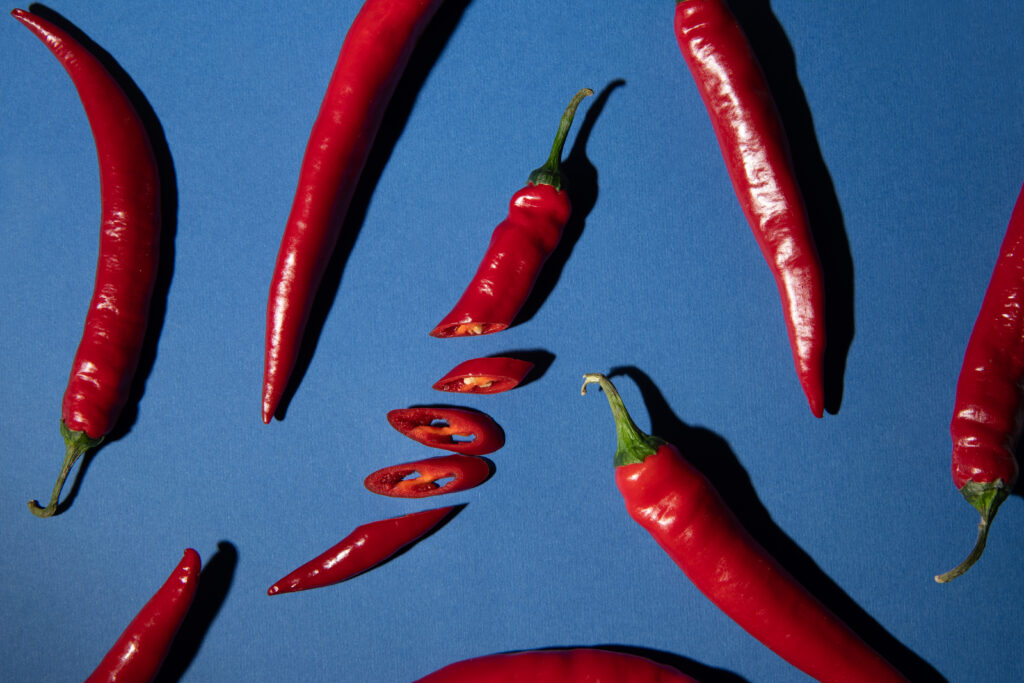
What is capsaicin?
Capsaicin is a natural compound that makes chilies spicy and gives them their distinctive flavor — one that’s both loved and feared.
Capsaicin doesn’t just add flavor to food — it also triggers a range of reactions in the body. At first, you may feel a slight tingling in the mouth, which quickly turns into a burning sensation. Then the body rewards you with a rush of endorphins, drawing you back to chili again and again.
But what exactly is capsaicin used for? In this article, we’ll dive into its many applications and what you should know about it — for everyone from those who enjoy heat and diverse flavor profiles to those interested in capsaicin’s potential health benefits.
Where does capsaicin come from? Its natural purpose and role in plants
Kapsaisiini on peräisin Capsicum-suvun kasveista, kuten jalapeñoista, habaneroista ja muista chileistä. Se on chileille ominainen puolustusmekanismi, joka auttaa kasvia suojaamaan itseään eläimiltä ja hyönteisiltä, jotka voisivat muuten syödä sen marjan.
Capsaicin’s intense heat deters rodents and other mammals from eating chilies and also acts as a defense against bacteria and fungi. Birds, however, don’t feel the burn — which works perfectly for chilies, as birds efficiently spread their seeds.
How did people discover the use of capsaicin?
Capsaicin has been part of human diets and cultures for thousands of years, especially in Central and South America. The Maya and Aztecs observed that chilies had various health-related effects, including pain-relieving and anti-inflammatory properties. Chilies were made into teas and other drinks, as they were believed to have healing benefits.
- The spread of chili to other parts of the world: When Spanish conquistadors arrived in the Americas in the 1400s, they encountered chili peppers and brought them back with them. Through maritime trade routes, chili spread to Asia and Southern Europe. At first, it was used mainly as an ornamental plant, though its health benefits were already appreciated. Gradually, chili also found its way into cooking.
- The spread of chili to other parts of the world: When Spanish conquistadors arrived in the Americas in the 1400s, they encountered chili peppers and brought them back with them. Through maritime trade routes, chili spread to Asia and Southern Europe. At first, it was used mainly as an ornamental plant, though its health benefits were already appreciated. Gradually, chili also found its way into cooking.
- Measuring capsaicin and heat: In the early 1900s, Wilbur Scoville developed the Scoville scale, which measures a chili’s heat level based on its capsaicin content. This scale made it easier to understand the effects of capsaicin and helps us compare the intensity of heat across different chili varieties.
The effects of capsaicin when eating chili
The most well-known effects of capsaicin are the body’s short-term reactions when eating chili peppers. Although capsaicin doesn’t actually raise body temperature, it tricks the nervous system into thinking it does. This creates an intense burning sensation in the mouth, along with other effects that vary depending on factors such as the amount consumed.
Why does capsaicin burn?
When capsaicin comes into contact with the mucous membranes in the mouth, it activates heat-sensitive receptors (called TRPV1) that are found throughout the body. Capsaicin essentially tricks these receptors into firing even though there is no actual heat present. As a result, the body may respond by increasing sweating, raising heart rate, and causing the cheeks to flush.
Why do people react differently to capsaicin?
These receptors also explain why people experience chili heat differently. Some are naturally more sensitive to chili, while repeated exposure builds tolerance to spiciness. Experienced chili lovers and those who eat it regularly can develop a higher tolerance to capsaicin and enjoy extremely hot chilies.
Short-term side effects of excessive capsaicin consumption
While capsaicin can be an enjoyable experience, excessive consumption may lead to short-term side effects. The most common include:
- Stomach discomfort: Consuming a large amount of capsaicin at once can irritate the stomach, causing heartburn or stomach pain.
- Unpleasant sensations elsewhere in the body: A large dose of capsaicin at once may cause sweating, dizziness, and headaches.
These symptoms are usually temporary and can be avoided by reducing the amount of capsaicin consumed at one time and gradually allowing the body to adapt to its effects over time.
How to manage heat when enjoying chili
If capsaicin causes too much burn, there are a few ways to manage the heat and reduce the burning sensation:
- Milk and dairy products: Milk, yogurt, and cheese contain casein, which helps dissolve capsaicin oils and soothe the burn.
- Fatty foods: Capsaicin is fat-soluble, so fatty foods such as avocado or nuts can also help reduce the heat.
- Eat in moderation: If the heat feels too intense, enjoy chili in smaller amounts and give your body time to adapt to the effects of capsaicin.
The most common mistake when eating spicy chilies is drinking water. It’s not an effective way to put out the heat, because capsaicin is fat-soluble. Water can even spread the burn and make it feel worse.
Is capsaicin healthy?
Capsaicin isn’t just a seasoning for food — it also has many uses beyond cooking. Its beneficial chemical properties make it useful in weight management, supporting heart health, and pain relief.
Health effects of consuming capsaicin
- Boosting metabolism and weight management: Capsaicin raises the body’s perceived temperature and can increase energy expenditure, helping the body burn more calories even at rest. It has also been shown to reduce appetite, which may help with eating less overall.
- Antioxidant effects: Capsaicin is an antioxidant that can help neutralize the effects of free radicals in the body’s cells.
- Heart and cardiovascular health: Capsaicin may improve blood circulation and help reduce stiffness in blood vessels, which in turn can support lower blood pressure. It may also help lower LDL cholesterol levels — the so-called “bad” cholesterol linked to heart disease.
- Mood enhancement: Capsaicin stimulates the release of endorphins — the body’s “feel-good” hormones — which can help reduce stress and improve mood. This may explain why many people enjoy spicy foods and feel that chili gives them a boost both physically and mentally.
- Digestion and gut health: Many people wonder what chili actually does to the stomach and the digestive system. When consumed in moderation, capsaicin doesn’t cause stomach issues for most people. On the contrary, it can stimulate the release of digestive juices in the gut. For this reason, capsaicin may aid digestion and support overall gut health.
The use of capsaicin in pain relief
Capsaicin binds to receptors responsible for sensing pain and heat. This is why it is an effective ingredient in pain relief, especially in topical creams and patches. Capsaicin is used to treat both acute and longer-term pain, also through orally consumed supplements and medications.
- Capsaicin-containing creams and patches: Capsaicin is a common ingredient in various pain-relief creams and patches. Capsaicin cream helps alleviate joint and muscle pain as well as chronic conditions such as osteoarthritis and muscle cramps.
- Dietary supplements: Capsaicin is also added to supplements taken internally, which are used to help relieve pain, inflammation, or muscle tension.
The role of capsaicin as a natural pesticide
Capsaicin’s many uses extend beyond the human body. It can be used to deter both insects and rodents. Its burning effect irritates animals’ mucous membranes, causing them to avoid areas where capsaicin has been applied.
Capsaicin can also be used in homemade sprays to keep insects and rodents away from places like gardens or storage areas. By mixing chili powder with water and adding a drop of dish soap, you can create a natural and effective deterrent.
Capsaicin in cooking
Capsaicin is one of the key ingredients in many international cuisines, adding depth, heat, and complexity to food.
The role of capsaicin in the flavor experience
Capsaicin can activate the taste receptors, enhancing the intensity of other flavors such as sweetness, saltiness, and umami. This is why chilies have long been an essential part of many different food cultures.
Mild vs. hot chilies in cooking
Capsaicin is what makes chilies hot. Different chilies bring varying levels of heat and flavor to food, and their use depends on how intense a burn you’re aiming for.
- Mild chilies: For example, jalapeño and poblano add more flavor and freshness than intense heat. They’re especially well suited for soups, salads, and salsas where you want warmth without overpowering spiciness.
- Hot chilies: For example, habaneros, Carolina Reaper, and Ghost Pepper deliver extreme heat and depth. Spice blends and hot sauces made from these chilies should be used sparingly, as their burn can be exceptionally intense.
Exploring capsaicin through high-quality chili products
With chili seasonings, you can turn everyday dishes into exciting flavor experiences. Chili can enhance a dish’s existing flavors while adding just the right amount of heat. Some sauces and spices pair better with certain foods than others, but there are also plenty of versatile options that work with almost anything.
🌶️ Find the sauce or seasoning that’s just right for you — check out Soosikauppa’s spice selection!